Keeping road crews and drivers safe requires more than just placing signs along the highway—it requires ensuring those signs can be seen in the worst possible conditions. The Manual on Uniform Traffic Control Devices (MUTCD) establishes strict visibility and retro-reflectivity standards for all temporary traffic control (TTC) devices.
If your work zone signs fail to meet these minimum visibility requirements, you risk driver confusion, compromised crew safety, and severe compliance violations.
The MUTCD Baseline: Day vs. Night Operations
Visibility requirements hinge entirely on when your work zone is active.
- Daytime Operations: Temporary signs must be highly visible, typically utilizing fluorescent orange backgrounds to stand out against environmental clutter. Retro-reflectivity is not strictly required if the operation begins after sunrise and ends before sunset.
- Nighttime Operations: If a work zone remains active after dark, or if signs are left up overnight (even if crews are not present), the MUTCD mandates that all signs must be retroreflective. The material must bounce vehicle headlight beams directly back to the driver's eyes.
Choosing the Right Roll-Up Sign Material
Selecting the correct sheeting material is the most critical step in meeting visibility compliance. Temporary roll-up signs are categorized by their reflective properties.

Temporary roll-up signs are categorized by their reflective properties.
1. Mesh and NVRFO (Daytime Only)
- Mesh: Lightweight and breathable, ideal for windy conditions.
- NVRFO (Non-Reflective Fluorescent Orange): A solid vinyl option that offers excellent daytime contrast.
- Compliance: Neither of these materials is retroreflective. They are strictly for daytime use and must be removed or covered before dusk.
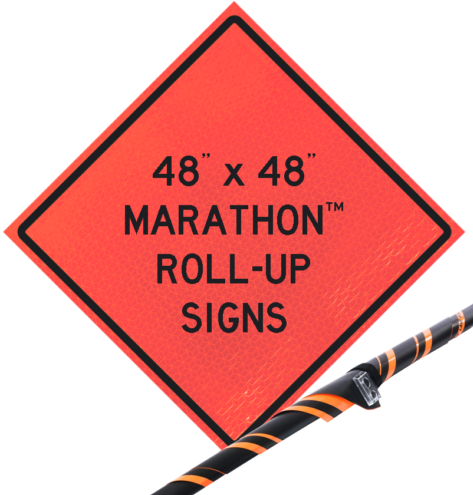
2. Marathon / High-Intensity Prismatic (Standard Nighttime)
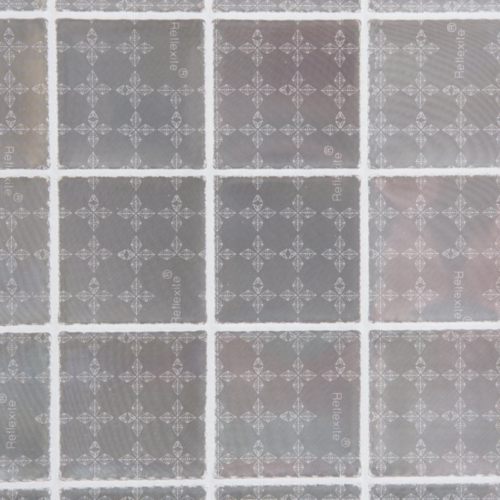
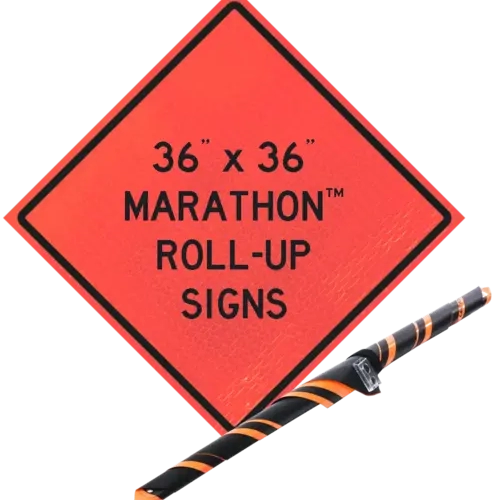
- Properties: High-Intensity Prismatic (HIP) materials, often branded as Marathon in roll-up signs, use micro-prismatic technology to return significantly more light than older engineer-grade materials.
- Compliance: Meets MUTCD requirements for standard nighttime operations. This is the workhorse material for most municipal and contractor nighttime applications.
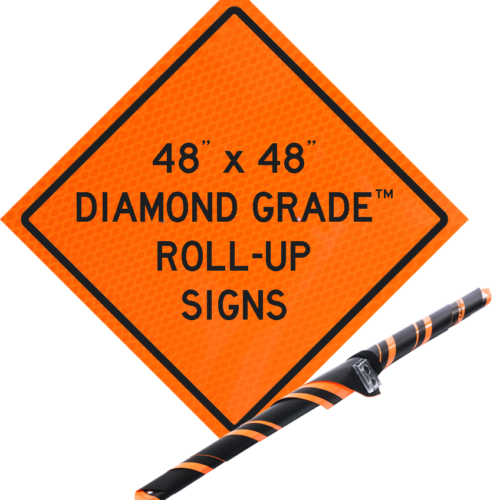
3. Diamond Grade (High-Speed / High-Clutter)
- Properties: The highest level of retro-reflectivity available. It features highly efficient, full-cube prismatic optics that return light at wider angles.
- Compliance: Exceeds MUTCD minimums. Diamond Grade is essential for high-speed interstates, visually complex urban environments with competing ambient light, and areas where drivers have minimal reaction time.
Placement and Maintenance Matter
Even the highest-grade reflective sheeting will fail MUTCD visibility standards if it is not deployed and maintained correctly.
- Mounting and Angles: Retro-reflectivity relies on geometry. Signs must be mounted facing traffic squarely. Temporary roll-up signs should be secured on sturdy, zinc-plated steel or aluminum stands to prevent them from leaning or twisting out of the driver's line of sight, especially in high-wind conditions.
- Cleanliness: Dirt, road salt, and mud act as a barrier to light. A High-Intensity sign covered in grime will perform worse than a clean, lower-grade sign. Regular washing is required to maintain compliance.
- Damage Assessment: Scratches, fading, and delamination permanently degrade a sign's optical performance. If a sign is visibly degraded during daytime inspection, it will almost certainly fail nighttime retro-reflectivity tests and must be replaced.
For more guides on traffic safety equipment, regulatory compliance, and field maintenance, return to the Eastern Metal Knowledge Center.
-
 Marathon™ Vinyl 48" x 48"
Marathon™ Reflective Vinyl – 48″ x 48″ Roll-Up Signs
Select options This product has multiple variants. The options may be chosen on the product pageQuick View -
 White Reflective Vinyl
Roll-Up Signs – White Reflective Vinyl
Select options This product has multiple variants. The options may be chosen on the product pageQuick View -
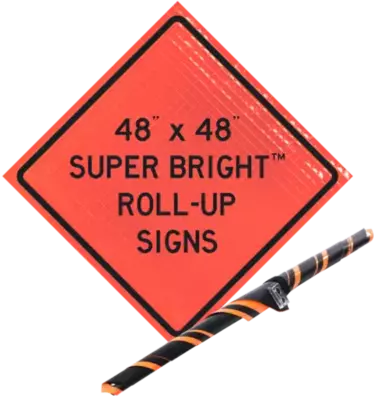
 Super Bright Vinyl 48" x 48"
48″ Roll-Up Super Bright™ Reflective
Select options This product has multiple variants. The options may be chosen on the product pageQuick View -
Diamond Grade™ Vinyl 48" x 48"
Roll-Up 48″ Diamond Grade™
Select options This product has multiple variants. The options may be chosen on the product pageQuick View -
Marathon™ Vinyl 36" x 36"
36″ x 36″ Roll-Up Marathon™ Reflective
Select options This product has multiple variants. The options may be chosen on the product pageQuick View