When severe weather or heavy traffic drafts roll through a work zone, temporary signage is often the first line of defense to fail. A sign that blows over, twists out of alignment, or snaps under pressure immediately compromises driver navigation and crew safety.
Selecting a high-wind sign stand requires moving beyond basic, rigid frames and investing in engineered stability. Here is what you need to look for to ensure your traffic control devices stay upright and MUTCD-compliant in adverse weather.
1. Look for a Dual-Spring Deflection System
Rigid stands absorb the full force of a wind gust, which acts as a lever against the base and causes the unit to tip. To survive high-wind environments, a stand must be able to spill the wind.
- Dual Coil Springs: Heavy-duty stands utilize a dual-spring base system. This allows the vertical mast—and the roll-up sign attached to it—to flex backward under heavy wind loads.
- Energy Transfer: As the mast bends, the wind slips over the top of the sign panel. The springs absorb the kinetic energy, keeping the legs firmly planted on the asphalt rather than lifting them into the air.
2. Evaluate the Footprint and Leg Design
A low center of gravity and a wide stance are non-negotiable for high-wind stability.
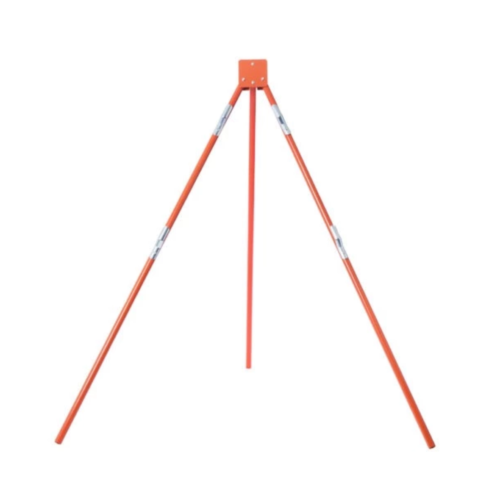
- Telescoping Legs: Roads are rarely perfectly flat, especially near shoulders or ditches. Stands with independently adjustable, telescoping legs allow you to deploy a perfectly plumb sign even on uneven terrain.
- Kick-Release Systems: For quick deployment in hazardous conditions, kick-release legs allow crews to lock the stand into an extended, wide-footprint position in seconds without struggling with manual pins.
3. Prioritize Resilient Component Materials
High winds don't just push stands over; they put immense shearing force on the joints, brackets, and mast. Brittle materials will crack under this repeated stress.
- Leg Construction: Look for stands constructed with aircraft-grade aluminum legs. Aluminum provides a high strength-to-weight ratio, keeping the stand heavy enough to remain grounded but light enough for a single worker to deploy.
- Heavy-Duty Bracketry: The joints connecting the mast to the base are the primary stress points. To prevent failure and corrosion, quality brackets are almost always made of zinc-plated steel or aluminum. This ensures the hardware can withstand heavy wind torsion and exposure to road salt without degrading.
- Sourcing and Assembly: While components may be manufactured globally, it is crucial that the final assembled stand meets stringent federal crash-testing guidelines before deployment.
4. Ensure MASH-2016 Compliance
Stability cannot come at the expense of crash safety. If a high-wind stand is placed on the National Highway System (NHS), it must be federally compliant.
- Heavy-duty stands must pass MASH-2016 (Manual for Assessing Safety Hardware) crash testing.
- This ensures that if a vehicle impacts the stand, the robust springs and aluminum legs will yield or break away predictably, rather than penetrating the windshield or causing a catastrophic rollover.
5. Proper Ballasting (Sandbagging)
Even the best high-wind stands occasionally need reinforcement during extreme storm systems. However, ballasting must be done according to MUTCD guidelines.
- Do not use heavy, solid objects: Never place concrete blocks, rocks, or heavy equipment on the legs of a sign stand. These become deadly projectiles in a work zone intrusion.
- Use approved sandbags: Place heavy-duty sandbags specifically on the base or the lower legs. Keep the weight as close to the ground as possible to lower the center of gravity without interfering with the breakaway mechanics of the stand.
Shop Heavy-Duty Sign Stands
For more guides on traffic safety equipment, regulatory compliance, and field maintenance, return to the Eastern Metal Knowledge Center.