
Compact Sign Stands: The Ultimate Buying Guide
Your definitive educational resource for temporary traffic control equipment
Table of Contents
- Introduction
- What is a Compact Sign Stand?
- How Compact Sign Stands Work
- Who Uses Them
- Advantages and Limitations
- When Not To Use One
- Common Types of Compact Sign Stands
- How to Choose the Right Sign Stand
- Expert Insights: Deployment & Standardization
- Maintenance, Repair, and Storage
- Tables: Comparisons & Checklists
- 50 Frequently Asked Questions
- Buying Checklist & Summary
1. Introduction
Managing temporary traffic control requires equipment that is fast to deploy, highly visible, and relentlessly reliable. Eastern Metal Signs & Safety has been in continuous operation since 1947, pioneering advancements like one of the first temporary sign stands[cite: 1]. Over decades of manufacturing and distribution, one truth remains constant: your work zone's safety depends heavily on the stability and compliance of your signage.
This guide explores everything you need to know about purchasing, deploying, and maintaining compact roll-up sign stands. All Eastern Metal compact sign stands are MASH-tested, crash-worthy, and FHWA-approved, with WZ (Work Zone) compliance letters accessible directly from the FHWA website[cite: 1]. Whether you are outfitting a single utility truck or standardizing a state-wide DOT fleet, understanding these standards ensures total regulatory confidence.
2. What is a Compact Sign Stand?
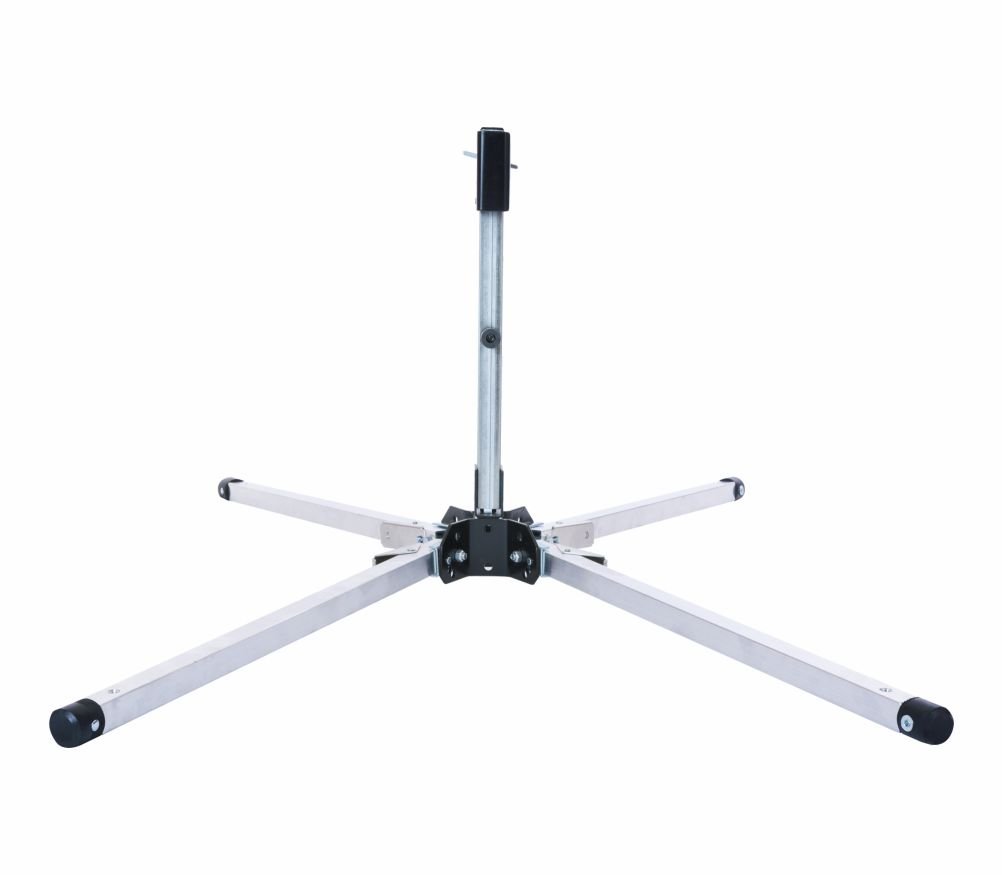
A compact sign stand is a portable, foldable base engineered to display temporary warning signs—typically roll-up flexible signs—in work zones. Designed for rapid deployment, these stands collapse into a small footprint, making them ideal for vehicles with limited storage space.
Built for durability and ease of use, they provide essential ground support for traffic management crews operating across municipal, utility, and highway projects.
3. How Compact Sign Stands Work
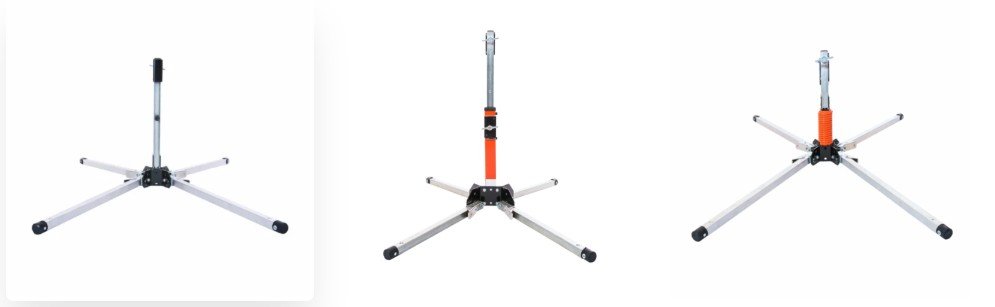
These stands utilize a central mast or bracket system connected to foldable legs. The legs extend outward to create a wide, stable footprint[cite: 1]. Many models incorporate a spring mechanism (either coil-flex or fiberglass leaf-spring) at the base of the mast[cite: 1]. When heavy winds or the draft from passing semi-trucks hit the sign, the spring allows the mast to tilt, spilling the wind and preventing the stand from tipping over.
4. Who Uses Them
- DOT and Highway Departments: For rapid lane closures and mobile operations[cite: 1].
- Utility Contractors: For short-term shoulder work during line repairs[cite: 1].
- Municipal Public Works: For local road repairs, tree trimming, or emergency road flooding[cite: 1].
- Construction Companies: For managing ingress and egress at active job sites[cite: 1].
- Safety Managers & Rental Companies: For supplying compliant, easy-to-teach equipment to rotating crews[cite: 1].
5. Advantages and Limitations
Advantages
- Portability: They collapse into narrow profiles, easily fitting into truck mounting brackets[cite: 1].
- Rapid Deployment: Mechanisms like the kick-lever or direct-drive allow crews to set up in seconds[cite: 1].
- Adaptability: Multi-position telescoping legs adjust to uneven terrain and sloping road shoulders[cite: 1].
- Durability: Made from galvanized steel or aluminum to resist harsh weather[cite: 1].
Limitations
- Mounting Height: Compact stands are generally designed for temporary use and may not achieve the 5-foot to 7-foot minimum mounting heights required by the MUTCD for long-term or urban projects with pedestrian traffic.
- Rigid Sign Capacity: While some models can handle rigid signs, lightweight compact models are optimized primarily for roll-up signs.
6. When Not To Use One
Do not use a compact sign stand for long-term, stationary work zones (lasting several days or weeks) where driven posts or heavy barricade-mounted signs are required by local regulations. They are also inappropriate for dense urban environments where parked cars or pedestrians would block a sign mounted close to the ground.
7. Common Types of Compact Sign Stands
Eastern Metal provides several variations to meet different environmental demands[cite: 1].
Non-Wind Deflectable (Tripod & Compact)
- Tripod: The Apex Tri-Pod is a simple, heavy-duty steel design for basic needs[cite: 1]. It holds both rigid and roll-up signs a minimum of 14 inches above grade[cite: 1].
- Apex Compact: The entry-level Apex series fulfills basic needs without a spring mechanism[cite: 1]. Available in galvanized steel (20 lbs) or aluminum (16 lbs)[cite: 1].
Single Spring (Wind Deflectable)
- Apex Recoil: Features a single coil-flex spring for wind-deflection and stability[cite: 1]. Includes telescoping legs for uneven terrain and a mechanical pin leg release[cite: 1].
- Apex Flex: Utilizes a fiberglass leaf-spring instead of a coil, providing optimal lateral stability in high wind gusts[cite: 1].
Dual Spring & Heavy Duty
- Apex Dual Recoil: A mid-size stand with signature orange dual coil-flex springs[cite: 1]. Elevates rigid signs 18 to 60 inches and roll-up signs 14 to 84 inches above grade[cite: 1].
- Apex Dual Recoil Max: A full-size stand that displays rigid signs 18 to 84 inches and roll-up signs up to 120 inches above grade[cite: 1].
- Apex Summit: Features dual fiberglass leaf-springs and a mechanical direct-drive leg release[cite: 1].
Specialized Mounts
- Truck Mount Storage Bracket: Securely stores compact stands inside or outside the truck for quick access[cite: 1].
- Concrete Median Barrier Clamp: Holds rigid and roll-up signs on concrete barriers, featuring dual vertical coil-springs for wind deflection[cite: 1].
8. How to Choose the Right Sign Stand
Selecting the correct stand involves evaluating the specific realities of your work zone.
- Traffic Speed & Wind: High-speed highways generate massive air displacement from commercial trucks. In these environments, dual-spring models like the Apex Dual Recoil Max are necessary[cite: 1]. For low-speed municipal roads, a single-spring Apex Recoil or a non-deflectable Apex Compact is often sufficient[cite: 1].
- Road Type & Shoulder Conditions: If you deploy on steep embankments or uneven gravel shoulders, choose stands with multi-position, telescoping legs that can level the mast independently[cite: 1].
- Storage & Vehicle Space: If your fleet consists of smaller utility vehicles, focus on stands that fit into standard Truck Mount Storage Brackets[cite: 1].
- Sign Sizes & Materials: Ensure the stand matches the substrate. Most compact stands hold flexible roll-ups perfectly, but if you mix in rigid aluminum or plywood signs, you need a heavy-duty model rated for the extra weight, like the Apex Summit[cite: 1].
- Durability vs. Weight: Aluminum stands (e.g., Apex-AL at 16 lbs) are easier for crews to carry long distances[cite: 1]. Galvanized steel (e.g., Apex at 20 lbs) offers heavier base weight for superior ground stability[cite: 1].
9. Expert Insights: Deployment & Standardization
Common Mistakes Crews Make
The most frequent error in temporary traffic control is neglecting leg adjustments. Crews often leave legs flat on uneven terrain, causing the mast to lean. This reduces sign retroreflectivity and increases tip-over risk. Multi-position legs exist to keep the mast perfectly vertical regardless of the ground angle[cite: 1].
Another mistake is placing stands directly on the white edge line. Always place equipment fully on the shoulder where possible, stepping back to ensure it does not encroach on the travel lane.
Fleet Standardization
Municipalities and large contractors benefit greatly from standardizing their sign stands. Using one style (e.g., standardizing on the Apex Recoil) means workers only need to learn one release mechanism (like the kick-lever or mechanical pin)[cite: 1]. It also simplifies parts management; a centralized maintenance shop only needs to stock one type of replacement spring, foot pad, or locking pin.
Long-Term Ownership Costs
While economy pogo stands or basic tripods have low initial costs, wind-deflectable spring stands offer better long-term ROI. A rigid stand blown into a travel lane can result in destroyed signs, damaged equipment, or worse—liability for accidents.
10. Maintenance, Repair, and Storage
Proper maintenance extends the life of your equipment significantly.
- Daily Inspections: Check anti-skid foot pads[cite: 1]. Missing pads allow passing traffic vibrations to "walk" the stand into the road[cite: 1].
- Cleaning: Rinse dirt, mud, and road salt from leg sliding mechanisms and spring coils. Salt accumulation degrades tension over time.
- Storage Tips: Never store stands wet, especially if using vinyl roll-up signs. Moisture degrades the reflective sheeting. Use Heavy-duty vinyl storage cases to protect roll-up signs from truck-bed abrasion[cite: 1].
- Troubleshooting: If legs become difficult to deploy, do not force them with a hammer. Clean the release pins and apply a dry silicone lubricant (avoid wet oils that attract grit).
11. Tables: Comparisons & Checklists
1. Stand Types Overview
| Feature | Non-Deflectable | Single Spring | Dual Spring |
|---|---|---|---|
| Wind Resistance | Low to Moderate | High | Maximum |
| Best For | Urban, low speed | Rural, moderate speed | Highways, high speed |
| Example Model | Apex Compact | Apex Recoil | Apex Dual Recoil |
2. Application Guide
| Environment | Recommended Equipment | Reason |
|---|---|---|
| Sidewalk / Urban | Apex Compact | Minimal footprint, no spring needed |
| Uneven Shoulder | Apex Recoil | Telescoping, multi-position legs adapt to slope[cite: 1] |
| Interstate Highway | Apex Dual Recoil Max | Handles max wind load from semi-trucks[cite: 1] |
3. Material & Weight Comparison
| Model | Material | Weight (lbs) | Open Size (in) |
|---|---|---|---|
| Apex Compact | Galv Steel[cite: 1] | 20[cite: 1] | 41 x 68 x 27.5[cite: 1] |
| Apex Compact AL | Aluminum[cite: 1] | 16[cite: 1] | 41 x 68 x 27.5[cite: 1] |
| Apex Flex | Galv Steel[cite: 1] | 20[cite: 1] | 41 x 68 x 89[cite: 1] |
| Apex Summit | Aluminum[cite: 1] | 41[cite: 1] | 48 x 149 x 150[cite: 1] |
4. Pros and Cons of Compact Stands
| Pros | Cons |
|---|---|
| Fast deployment[cite: 1] | Lower mounting height |
| Space-saving storage | Not for long-term work zones |
| Adaptable to varied terrain[cite: 1] | Vulnerable to extreme weather without sandbags |
5. Storage Size Comparison
| Model | Storage Size (in) |
|---|---|
| Apex Compact | 7.5 x 9.5 x 26.5[cite: 1] |
| Apex Recoil | 8 x 9 x 30[cite: 1] |
| Apex Dual Recoil | 12 x 8 x 63[cite: 1] |
6. Suggested Maintenance Schedule
| Frequency | Task |
|---|---|
| Daily | Inspect anti-skid pads[cite: 1] and release pins[cite: 1]. |
| Weekly | Wash away road salt and mud. |
| Monthly | Test spring tension and telescoping leg locks[cite: 1]. |
7. Recommended Sign Attachments
| Substrate | Best Attachment Bracket |
|---|---|
| Roll-up (Flexible) | Spin-handle, Universal[cite: 1] |
| Rigid (Aluminum) | Rigid / Quick X-Connect[cite: 1] |
8. Concrete Median Barrier Clamps
| Model Number | Grip Range | Weight (lbs) |
|---|---|---|
| MBC-8-553 | 3" - 8"[cite: 1] | 30[cite: 1] |
| MBC-12-553 | 5" - 12"[cite: 1] | 35[cite: 1] |
| MBC-15-603 | 8" - 15"[cite: 1] | 43[cite: 1] |
9. Inspection Checklist
- Are all four anti-skid foot pads present?[cite: 1]
- Do telescoping legs lock securely at all heights?[cite: 1]
- Is the sign mounting bracket free of debris?[cite: 1]
- Does the spring return to vertical immediately after being bent?[cite: 1]
12. 50 Frequently Asked Questions
- What is a compact sign stand? A portable base designed to securely display temporary traffic control signs while folding down to save vehicle space.
- Do compact stands meet MUTCD standards? Yes, all Eastern Metal compact sign stands are MASH-tested, crash-worthy, and FHWA-approved, with WZ compliance letters available directly from the FHWA website[cite: 1].
- What is MASH testing? The Manual for Assessing Safety Hardware; it ensures the stand breaks away or yields safely if struck by a vehicle.
- How do I attach a roll-up sign? Most use a universal spin-handle or a Quick X-Connect bracket[cite: 1].
- Can I use a compact stand for rigid signs? Yes, specific mid-to-full size models like the Apex Dual Recoil can hold rigid signs up to 84 inches above grade[cite: 1].
- What is the difference between coil springs and leaf springs? Coil springs (Apex Recoil) deflect in all directions, while fiberglass leaf-springs (Apex Flex) offer targeted lateral stability[cite: 1].
- Are aluminum or steel stands better? Aluminum is lighter for transport (16-17 lbs), while galvanized steel (20+ lbs) offers a heavier center of gravity for stability[cite: 1].
- What are anti-skid foot pads? High-traction rubber boots on the legs that prevent the stand from migrating across the road due to vibration[cite: 1].
- How do telescoping legs work? They slide out to extend the footprint and can be locked at different lengths to compensate for curbs or embankments[cite: 1].
- What is a kick-lever release? A foot-operated mechanism that releases the leg lock, keeping workers from bending over into traffic[cite: 1].
- How long do the springs last? With standard usage and proper cleaning to prevent rust, coil springs can last several seasons.
- Can compact sign stands be used on gravel? Yes, the multi-position legs adapt well to gravel[cite: 1], though sandbagging is recommended for loose surfaces.
- Do compact stands work in high winds? Yes, wind-deflectable models spill wind effectively[cite: 1].
- How much does weight matter? Heavier stands are harder to carry but provide excellent base stability.
- Which stand is easiest to transport? The Apex Compact Aluminum, weighing just 16 lbs and folding to 7.5 x 9.5 x 26.5 inches[cite: 1].
- What size roll-up sign fits a compact stand? They typically accommodate 36-inch and 48-inch roll-up signs.
- What is an outrigger? A leg extension that adds an additional 18.5 inches of stability to the base footprint[cite: 1].
- Can I mount flags on these stands? Yes, using a 3-flag holder bracket made from zinc-plated steel[cite: 1].
- What is the Apex Tri-Pod? An economical, 18 lb steel stand with fixed legs for basic use[cite: 1].
- Can I mount stands on a guardrail? Yes, using an H-Beam guard rail sign mount (e.g., GRC-3 for 3" beams)[cite: 1].
- Can I mount stands on a concrete barrier? Yes, using a Concrete Median Barrier Clamp[cite: 1].
- What happens if a stand "walks"? It drifts into the travel lane, creating a hazard. Anti-skid pads prevent this[cite: 1].
- What is the Pogo Economy Holder? A simple steel angle stand for highly economical roll-up sign deployment[cite: 1].
- How do I store them in a truck? Using a Truck Mount Storage Bracket that fits all compact stands[cite: 1].
- Can I mount a sign in a vehicle hitch? Yes, a Vehicle Hitch Mount fits a 2" receiver for roll-up signs up to 48"[cite: 1].
- What speeds are hitch mounts rated for? They are intended for slow-moving or stopped vehicles; signs should be removed above 30 mph[cite: 1].
- What is a Lexan washer? A clear 1" washer used to rivet a sign to its brace without obstructing the legend[cite: 1].
- How high do signs sit on a Tri-Pod? A minimum of 14 inches above grade[cite: 1].
- How high can the Apex Summit elevate a sign? Up to 120 inches above grade for roll-up signs[cite: 1].
- What is a short third brace? An optional brace used to attach square roll-up signs to a mid/full-size stand bracket[cite: 1].
- Why use a Flag Tree stand? To provide high-level advance warning, holding up to 5 flags on a fixed mast[cite: 1].
- What are the corner pocket options for roll-ups? Full-Lexan, Half-Lexan, Lock-Pocket, K-Pocket, and Sewn Pocket[cite: 1].
- Are fiberglass ribs better? Yes, high-performance "finished" ribs are smooth for safe handling and designed with specific flex-points[cite: 1].
- Should I leave signs attached during transport? No, removing signs prevents damage and sail-effect in the truck bed.
- What is the signature visual of Eastern Metal stands? The high-visibility orange spring[cite: 1].
- Are they suitable for northern winters? Yes, provided the release pins are kept clear of ice and road salt[cite: 1].
- Do they require special tools to assemble? No, most feature tool-less deployment via pins and spin-handles[cite: 1].
- How do I handle maintenance in a large fleet? Standardize your purchasing to ensure parts interchangeability.
- Can a single spring stand handle rigid aluminum signs? Usually no; dual-spring or fixed heavy-duty stands are required to prevent twisting.
- What is a direct-drive leg release? A mechanical system that locks legs securely without external kicking levers[cite: 1].
- How do I prevent signs from kiting? High-quality roll-ups feature an anti-kiting strap to keep the fabric tensioned against the ribs[cite: 1].
- Can I wash the stands? Yes, gentle power washing removes corrosive salt.
- Is it better to repair or replace a damaged stand? If the mast or frame is bent, replace it. If a foot pad or pin breaks, repair it.
- What are the storage dimensions of the Apex Summit? 10 x 11 x 81 inches[cite: 1].
- What is the base material of the Econ Flasher Stand? The DSB-100 uses a rubber base[cite: 1].
- What is a Zephyr Rubber Base? A low-profile, heavy rubber base for simple sign mounting[cite: 1].
- How do you attach flags to the signs? Flags come with a 24", 30", or 36" staff that inserts into the bracket[cite: 1].
- Should I use sandbags with compact stands? Yes, in high wind situations, resting a sandbag on the legs increases stability.
- Why is the orange spring important? It acts as an additional high-visibility marker at ground level[cite: 1].
- Where are Eastern Metal stands manufactured? In the USA, with locations in North Elmira, NY, and Young Harris, GA[cite: 1].
13. Buying Checklist & Summary
Before submitting your purchase order, run through this checklist:
- Assess Traffic Speed: Select dual-spring stands for highways and single/no-spring for urban areas.
- Verify Substrates: Ensure you are buying roll-up brackets for flexible signs and rigid brackets for aluminum.
- Choose Material: Aluminum for crew ergonomics; steel for high-wind stability.
- Add Accessories: Include flag brackets, vehicle mounting brackets, and storage bags to protect your investment.
By understanding the engineering behind these stands, you ensure safer work zones, faster deployments, and better budget utilization for years to come.
